April 5, 2012

Obama Records Supportive Video for Planned Parenthood


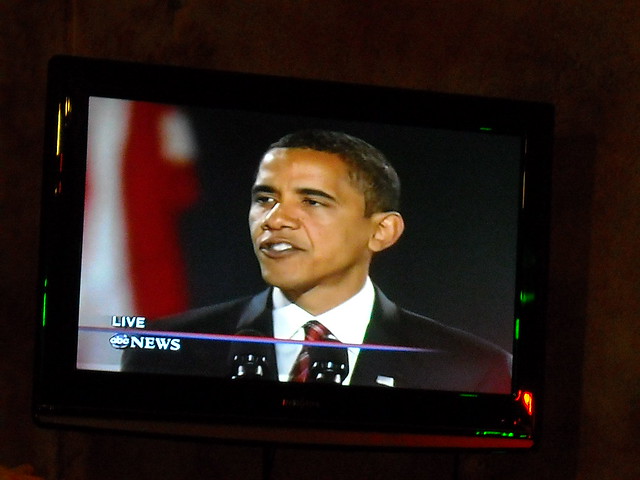
President Obama this week recorded a special video, thanking supporters of the Planned Parenthood Action Fund.
 
It's an election-year message to the lobbying arm of the nation's largest abortion seller, in which the president makes several disputable statements.
 
"We're grateful that through it all you never forgot who you're fighting for: The woman with a new lease on life because a mammogram caught her cancer in time. … So when some professional politicians casually say that they'll 'get rid of Planned Parenthood,' don't forget what they're really talking about — eliminating the funding for preventive care that millions of women rely on, and leaving them to fend for themselves."
 
Rep. Chris Smith, R-N.J., called the video "deeply troubling," given the fact that around 330,000 children are killed in Planned Parenthood clinics annually. Since 1977, he says that number tops 5 million.
 
"In watching the video, I was struck by how he bragged about saying 'No' when efforts were made to defund Planned Parenthood," Smith told CitizenLink. "The context was that he was willing to let the government shut down rather than defund a corporation that is 'Child Abuse, Inc.'
 
"He ignored what the issue is all about — abortion. Not mammography. We all know they don't do mammography. They might refer someone for it," he added. "For the president of the United States to not even mention what the controversy is about is very disingenuous."

Watch the president's video: http://www.youtube.com/watch?v=naP2FbO8_-c

Contact: Karla Dial
Source: CitizenLink

March 30, 2012

News Links for March 30th


Controversial UN document may uphold 'reproductive rights' for children

Obamacare is constitutional, contraceptive mandate is not, bishop argues

Federal Court Hears About Pregnancy Center Signs

Vatican approves blessing for child in womb

Another abortion patient rushed to hospital

Ave Maria School of Law Hosts Meeting of National Pro-Life Leaders

"Cannibalistic" abortionist illegally dumps abortion records in attempt to go green

Mich. abortion clinic abuses go 'uninvestigated'

Oklahoma Judge Blocks Ultrasound Law

Arizona Employer Protections Bill to Get Second Vote

Assisted Suicide Arrest Illustrates Death-on-Demand Logic of Euthanasia

Abortionist in hot water ... again

Pro-life provisions in US bishops' grant ruled unconstitutional

China admits transplanting organs from condemned prisoners

Abortionists feel immune from legal requirements

ADF Argues Against Guaranteed Right to Assisted Suicide

Europe's 'culture of death' on upswing

Conscience concerns could prove decisive in health care ruling

    The current U.S. Supreme Court Justices. Courtesy of the U.S. Supreme Court.
     U.S. Supreme Court Justices
 
Inadequate conscience protections may lead the Supreme Court to reject the 2010 health care law, a Jesuit priest and legal scholar predicted after three days of arguments in the historic case.

"I think there are sufficient problems with the bill, as passed, that the justices could say: 'This is unconstitutional,'" Father Robert J. Araujo, S.J., told CNA on March 29.

"There are certainly those problems that have been in the news, and I think there are some other ones. For example – the question of conscience, and conscience protection."

"This is a very complicated law, and the more we examine it, we see more problems and concerns," noted Fr. Araujo, who holds the John Courtney Murray Professorship at the Loyola University Chicago School of Law.

"I tend to think that's on the minds of the lawyers and the justices: 'Are we going to see more litigation, if we don't resolve these conscience-protection and other issues?'"

"That's why I see an opportunity for the court to say: 'Look, there are some serious problems with this legislation. Congress has done a lot of work, (but) it's their responsibility to write a law that will pass constitutional muster and judicial review."

The court's March 26-28 period of questioning focused on the law's "individual mandate," which requires virtually all citizens to obtain health insurance.

Most observers believe the law's fate will hinge upon whether the requirement is judged to be a means of regulating interstate commerce – as the Obama administration maintains – or an unconstitutional overtaking of states' power by the federal government.

Fr. Araujo thinks the law is unlikely to be upheld either fully or in part.

"Having followed the arguments and the questions, I don't think the likelihood of a complete vindication is very strong," the Loyola University professor predicted on March 29.

He also has doubts about the law being upheld with some portions removed – because legislators did not include a "severability" provision that would allow some parts to stand if others, such as the individual mandate, were struck down.

Although the main issue before the court is the individual insurance mandate, the Jesuit professor thinks other aspects of the law will factor into the court's decision as well – including the widely-criticized contraception and sterilization mandate, a federal rule made as part of the health care law's implementation.

The Supreme Court justices, he said, realize that there are constitutional concerns surrounding "who exactly is going to be paying for what" under the law, and "how that might affect their own moral concerns, which are constitutionally protected."

If the law is upheld, the justices could reasonably expect challenges to continue on different constitutional grounds – including the free exercise of religion, a factor in eight states' current lawsuits  against the law's contraception mandate.

The result could be "a repetition of what we've seen so far," with various lawsuits advancing in federal court seeking "review of the legality of certain provisions" in the health care law.

"There are lots of concerns with this legislation," Fr. Araujo said. "Do we want to have another 'go-around' in the not-too-distant future, on other elements?"

Health care, the priest and professor noted, is a pressing issue that seriously affects millions of people.

But the Obama administration, he suggested, should not have attempted to solve it in a manner that was both constitutionally questionable and morally provocative.

Although the Church regards health care as a right that should be secured for all members of society, opinions differ as to how this should be achieved in practice. The Catholic notion of "subsidiarity" requires that problems be solved by the lowest level of competent authority.

Some Catholic critics of the health care law have invoked this concept as a criticism of the federal health care reform, which they say could have been better handled by the individual states.

"I think in its own way, the U.S. Constitution – under the Tenth Amendment – in part addresses this important concept of subsidiarity," Fr. Araujo said, citing the provision by which the powers not given to the federal government by the constitution "are reserved to the states respectively, or to the people."

"What might be proper for Florida may not work in California," the Loyola University professor noted. "The states do have a proper, lawful role in determining what is good and what is not for their citizenry. That's how I see the subsidiarity rule playing out in the U.S. Constitution."

"The program Massachusetts legislated a few years ago is not without its problems or faults," Fr. Araujo observed, recalling legislation signed by then-Governor Mitt Romney. "But the state was addressing the issue of health care for its citizens."

CNA also spoke on March 29 with Professor Michael Scaperlanda, who teaches at the University of Oklahoma and contributes to the Catholic law blog "Mirror of Justice."

Scaperlanda has criticized the federal government's individual insurance mandate as unconstitutional. On Thursday, however, he held off from making any predictions as to whether the health care law would be upheld in part or in full by the Supreme Court.

But he noted that there were good reasons for Catholics to prefer state-level solutions to the problem of securing health care for all.

At the state level, he noted, a requirement for individuals to purchase insurance could be squared with both the Constitution and Catholic social teaching.

If the federal health care law is overturned, Scaperlanda is hopeful that solutions for the uninsured, and those with preexisting conditions, can be found at a lower level of authority.

"One reason would be, that our state legislators are much more accessible to us than our federal legislators," he explained.

"I'm Facebook friends with several of my state legislators; I can have conversations with them. They're much more in tune to the values of people in the community than people in Washington."

Similarly, individual states would have greater freedom to experiment to see which policies best solve the complex problems of health care reform. Other states could adopt policies that are shown to work, and more local control would make it easier to change those that do not achieve results.

"Multiple heads are better than one," Scaperlanda said.

"Having different proposals and solutions, and watching to see what works, leads to a better solution than having a small group of policy experts tell us what's going to work and then hoping for the best."

Contact: Benjamin Mann
Source: Catholic News Agency/EWTN News

HB 4085, the Illinois Ultrasound Bill

     Illinois Representative Joe Lyons
     Representative Joe Lyons

Yesterday Rep. Joe Lyons with the support of pro-life legislators defeated all of the hostile amendments in the Ultrasound Bill (HB 4085) which is on the floor of the IL House.

Five of the pro-life legislators were not present so an extension of time was requested so that the bill can be called later. We are hoping that his request will be granted today since today is the deadline for getting this bill out of the IL House.


About HB 4085

This bill creates the Ultrasound Opportunity Act.

This bill provides that at any facility where abortions are performed the physician who is to perform the abortion, the referring physician, or another qualified person working in conjunction with either physician will offer any woman seeking an abortion after 7 weeks of gestation an opportunity to receive and view an active ultrasound of her unborn child by someone qualified to perform ultrasounds at the facility, or at a facility listed in a listing of local ultrasound providers provided by the facility, prior to the woman having any part of an abortion performed or induced, and prior to the administration of any anesthesia or medication in preparation for the abortion.

House Sponsors are Representatives Joseph M. Lyons, Patricia R. Bellock, Brandon W. Phelps, Jil Tracy, Dwight Kay, Jerry F. Costello, II, Richard Morthland, Paul Evans, William Cunningham, Roger L. Eddy, Randy Ramey, Jr., Joe Sosnowski, Thomas Morrison, Michael P. McAuliffe, Jim Sacia, Daniel V. Beiser, John E. Bradley, John D. Cavaletto, Norine Hammond, Chris Nybo, JoAnn D. Osmond, David Harris, Dave Winters, Darlene J. Senger, Michael G. Connelly, Mike Bost and David Reis.

Source: Illinois Federation for Right to Life

March 28, 2012

Tens of thousands rally for religious freedom in 143 US cities


After drawing 54,000 people to 143 nationwide protests, leaders of the Stand Up For Religious Freedom campaign are more determined than ever to end the federal contraception mandate.

"From coast to coast, the response of the crowds at these rallies was a tremendous optimism that we can change the HHS mandate," said Pro-Life Action League Executive Director Eric Scheidler, who planned the March 23 "Rally for Religious Freedom" with Citizens for a Pro-Life Society.

"People came out for the very first time in their lives, to any sort of grassroots protest activity," Scheidler said of Stand Up For Religious Freedom's first effort.

"That happened in Chicago. It happened in San Francisco, in Washington, D.C., in New York, Philadelphia, and other large cities."

Each of those cities drew between 900 and 2,500 people, united in their desire to restore religious freedom by ending the president's contraception coverage rule.

"Before the rally, there was a real sense almost of despair – and certainly discouragement – that the federal government would be trying to strong-arm the religious institutions of this country," Scheidler said, describing the mood he observed after the controversial rule was confirmed earlier this year.

Health and Human Services' rule, requiring many religious institutions to offer contraception, sterilization, and abortion-causing drugs through their health plans, is being challenged in court by eight states. Scheidler said the rallies allowed individuals and communities to take a stand as well.

"People were hearing about it on Facebook, on Twitter, in the 'blogosphere,' and on Christian radio," the event's co-organizer recalled.

"Finally, in the days before the rally, they were hearing about it through the secular media."

The result was a broad coalition, drawing citizens of all faiths and none. "Catholic, Protestant, Jewish – even atheists and pagans came out to protest the HHS mandate, in unity with each other."

Turnout at last week's rallies exceeded Scheidler's expectations, and confirmed his sense that March 23 was "a starting point" for the larger effort.

"I was hoping that we just might be able to reach 10,000 attendees across the country," Scheidler said. "In fact, we've confirmed over 54,000 people came out, and that number's climbing as I get reports."

"Every indication is that the rallies were not an end, but a beginning – because people are fired up now."

Participants at the events were urged to take action in the weeks and months to come, by raising awareness among their friends and neighbors and calling on members of Congress.

Public education is "critical" in fighting the mandate, Scheidler said.

"There's been so much misinformation. This controversy has been so falsely presented to, and by, the mainstream media. We really have to work very hard to educate our neighbors and fellow church-goers."

He said public officials should also be called upon to defend conscience rights, whether or not this goal can be secured in the short-term.

"We realize that with Barack Obama in the White House, our chances of a legislative victory on this issue are perishingly thin."

"Yet every time we can raise this issue, every time there's a vote against the mandate – even when we lose a vote … that gives us yet another opportunity to publicly educate on this issue, and apply greater political pressure to have it overturned."

More than 60 organizations have joined the Pro-Life Action League and Citizens for a Pro-Life Society, in the Stand Up For Religious Freedom movement's "Coalition to Stop the HHS Mandate."

As that coalition grows, Scheidler encouraged supporters to turn to God in prayer – for their cause, and for those who oppose it.

"Pray for those forces in our culture that have been fighting for this mandate," the Pro-Life Action League's executive director said, citing Planned Parenthood, NARAL, and the Feminist Majority Foundation.

"Pray for our president – that he will have a conversion of heart, that he will relinquish this drive to push religious institutions out of the public square."

Day 3 of ObamaCare hearings


If the U.S. Supreme Court finds ObamaCare constitutional, a California attorney says conservative states will be put "under the thumb of the federal government."

Today is the third and last day the U.S. Supreme Court will hear arguments on the constitutionality of the Patient Protection and Affordable Care Act. The decision reached in the landmark hearing will determine whether the federal government can require all citizens to purchase health insurance. The court has also heard arguments from a handful of states and will decide if the rest of the act can be implemented without the individual mandate portion of the law, if it is found to be unconstitutional (see earlier story).

 Matt McReynolds, an attorney with the Pacific Justice Institute (PJI), explains what this decision will mean for conservative states.

 "If the court upholds the ability of Congress and the president to adopt this type of major takeover of an industry, then there is virtually nothing left for the states to exclusively govern," he warns. "This means that more conservative states especially will bear the brunt and be under the thumb of the federal government to tell them what to do with virtually no restraint."

 PJI notes that the law covers thousands of regulations, including the contraceptive mandate that has drawn criticism from a number of religious groups.

 Create it so you can regulate it

Day two of arguments at the high court was anything but subdued, and attorney Robert Muise expects the final decision to be close (Listen to audio report).

 Several justices, including Anthony Kennedy, reportedly asked pointed questions about the law in yesterday's hearing. The focus was whether Congress had exceeded its constitutional authority in requiring Americans to purchase insurance or pay a penalty. Robert Muise of the American Freedom Law Center (AFLC) says most analysts expect Justice Kennedy to be the swing vote.

"Kennedy only minutes into the arguments asked the solicitor general -- quote -- 'Can you create commerce in order to regulate it?' -- unquote -- and that's exactly the point," Muise offers. "Here the government is not regulating commerce; they're regulating inactivity. In fact, they're compelling, forcing people as a matter of federal law under penalty to engage in commerce. And then, once they're engaged in commerce, Congress is then seeking to regulate them under the Commerce Clause. So it flips the Commerce Clause on its head and it … really does give the federal government unbridled power to regulate all aspects of human existence."

 The AFLC founder argues that that is contrary "to the basic construct of our Constitution, where the federal government has limited enumerated powers."

 By all indications, Justices Ruth Bader Ginsburg, Stephen G. Breyer, Sonia Sotomayor, and Elena Kagan support the law. Based on questioning from several justices, Muise cautiously predicts a 5-4 vote against ObamaCare. The verdict will be reached by June.

Contact: Becky Yeh and Charlie Butts
Source: OneNewsNow

March 27, 2012

HB 5501 adoption bill voted down in the House


HB 5501 (the adoption bill) that the IFRL opposed was voted down in the House late Monday afternoon.
 
HB 5501 would have allowed an adopted person [over 21 years old] to be issued upon written request and without show of cause a certified copy of an adoption order under certain conditions.
Court records of adoption can have a large amount of confidential information that the birth parents expected to be under seal by the courts. This includes not only the names of the birth parents, but the addresses, other related and non-related siblings, fitness of parents, and more!
 
These birth parents, and generally the birth mothers expected privacy and confidentiality of their identities and family background when the adoption was taking place. HB 5501 eliminates much of that confidentiality. These women deserve this confidentiality since the decision whether to give up for adoption or have an aborton was often based on a factor of confidentiality. What trust can women have who struggle with this when the Illinois General Assembly continues with legislation to breakdown confidentiality?
 
Proponents of the law two years ago changing the adoption law, which exposed the birth parents by allowing adopted children to obtain a copy of the original certificate with the birth parents names, stated that the law allowed for preserving the birth parents privacy. The idea was to do a media campaign to alert birth parents to the section in that new law in which they could have their names redacted from the original birth certificate. This has proved to be a failure, as opponents of the law two years ago have warned. After a local and nation media effort, ONLY 500 birth parents out of over ONE MILLION came forward to ask for a redaction of their names. This doesn't show a good media effort, but just the opposite – very few birth parents learned of the new law! We in pro-life had said that the birth parents would not know the new law and requirements existed and the evidence bares this out.

Source: Illinois Federation for Right to Life

Illinois Federation for Right to Life Letter to Illinois House Memebers regarding HR 744


To: All Illinois House Members

PLEASE OPPOSE HOUSE RESOLUTION 744 (BERRIOS)

THE SO-CALLED "REPRODUCTIVE RIGHTS AWARENESS WEEK" RESOLUTION TO SUPPORT UNLIMITED ABORTION

It is no coincidence that this resolution makes the week of January 22-28, 2012 [already now passed?] a so-called "Reproductive Rights Awareness Week" since January 22 is the date in 1973 that the U.S. Supreme Court made its decisions of Roe v. Wade and Doe v. Bolton that legalized abortion throughout the full nine months of pregnancy.   

Supporting HR 744 is clearly SUPPORTING  abortions for any reason including:  

late-term partial-birth abortions

sex-selection abortions

abortions for birth control

taxpayer funding of all of these reasons and more.

And OPPOSING laws that include:  

parental notice/consent laws

informed consent for women regarding abortions

The vast majority of your constituents take an opposite view of what HR 744 stands for as listed above.

However, we would encourage House members to ask for a roll call vote if this bill were to come before the Illinois House for adoption.   

Again, Please OPPOSE and vote NO on HR 744.

Source: Illinois Federation for Right to Life

March 23, 2012

ACTION ALERT on HB4117


Your help is needed.  If you live in Illinois House District 54, 93 or 111 we need you to call your representative and let them know that they have your support on voting on HB4117.

These representatives have been receiving negative calls and need to hear that they still have our and your support to vote YES on HB4117.


District 54

Tom Morrison

(217) 782-8026
 or
(224) 210-6959


District 93

Norine Hammond

(217) 782-0416
 or
(309) 836-2707


District 111

Dan Beiser

(217) 782-5996
 or
(618) 465-5900

More on HB4117

This bill amends the Ambulatory Surgical Treatment Center Act and provides that an ambulatory surgical treatment center where abortions are performed, and any other facility where 50 or more abortions are performed in any calendar year, must comply with all of the statutes, rules, and regulations applicable to ambulatory surgical treatment centers generally.

For more please visit:
 http://www.ilga.gov/legislation/billstatus.asp?DocNum=4117&GAID=11&GA=97&DocTypeID=HB&LegID=63399&SessionID=84

News Links for March 23rd